Early Warning Signs Before a Stroke Occurs
Last updated: 20 Mar 2026
2471 Views
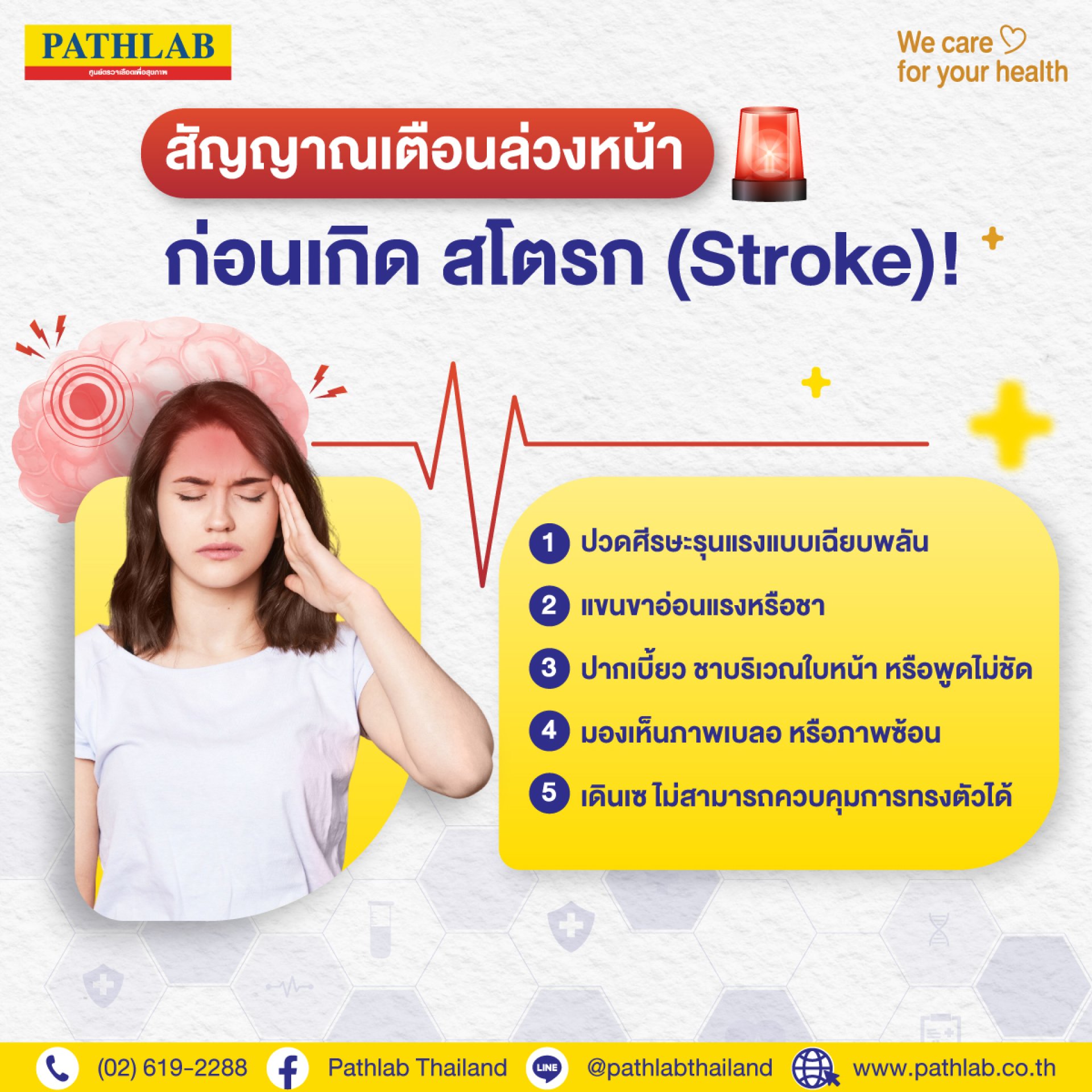
Many people believe that a Stroke (Cerebrovascular Disease) happens entirely without warning. In reality, our bodies often send "Early Warning Signs" beforehand. Recognizing these signs early significantly increases the chances of survival and full recovery.
Understanding Stroke: A Critical Condition to Watch
A stroke occurs when blood vessels in the brain become narrow, blocked, or ruptured, leading to a lack of blood supply to brain tissue. This causes brain damage and affects bodily functions, such as loss of speech, limb weakness, or loss of consciousness.
A stroke is a "Medical Emergency" that requires immediate treatment within a few hours. However, the good news is that many patients experience warning signs before a major event occurs.
Acute Warning Signs You Should Not Ignore
Certain symptoms may appear days in advance or come and go within a month before a stroke actually happens, such as:
Sudden, severe headache with no clear cause.
Dizziness, lightheadedness, or frequent falls.
Easy fatigue, even during minor activities.
Weakness or numbness in the arms or legs, usually on one side of the body.
Facial drooping, numbness in the face, slurred speech, or sudden confusion.
Blurred or double vision.
Loss of balance or inability to walk normally.
If you experience any of these symptoms, seek medical attention immediately. Additionally, high-risk lifestyle behaviors can accelerate the onset of a stroke. Immediate health screening is highly recommended.
The Connection Between Stroke and Cardiovascular Disease
Individuals at risk for cardiovascular diseases—such as High Blood Pressure, Diabetes, High Cholesterol, or Atrial Fibrillation (AF)—often face an increased risk of stroke. Since the blood vessels supplying the heart and the brain deteriorate in similar ways, poor heart health often directly impacts the brain's vascular system.
Prevention Starts with "Health Screening"
Even without symptoms, you can assess your stroke risk through Laboratory Blood Tests. Nowadays, stroke risk is increasingly found in working-age individuals due to environmental factors, diet, and stress—whereas it was previously most common in the elderly. Key tests include:
Lipid Profile: Cholesterol, HDL, LDL, and Triglycerides.
Blood Sugar Levels: Fasting Blood Sugar (FBS) and HbA1C (Average blood sugar).
Liver & Kidney Function: SGOT, SGPT, BUN, and Creatinine.
Complete Blood Count (CBC).
Furthermore, regular blood pressure monitoring and reviewing medical history help provide a more accurate risk assessment.
Conclusion
A stroke does not always happen "out of the blue." Our bodies often send warning signals of underlying abnormalities. Observing these symptoms and performing blood tests to evaluate the cardiovascular and neurological systems are the keys to preventing a life-altering event.
If you have symptoms or risk factors like hypertension, diabetes, or high cholesterol, do not wait until it’s too late. An annual blood test is the most valuable long-term investment in your health.
References
World Stroke Organization: https://www.world-stroke.org
American Stroke Association: “Stroke Symptoms”: https://www.stroke.org
Department of Disease Control, Ministry of Public Health, Thailand.
The Heart Association of Thailand.
Understanding Stroke: A Critical Condition to Watch
A stroke occurs when blood vessels in the brain become narrow, blocked, or ruptured, leading to a lack of blood supply to brain tissue. This causes brain damage and affects bodily functions, such as loss of speech, limb weakness, or loss of consciousness.
A stroke is a "Medical Emergency" that requires immediate treatment within a few hours. However, the good news is that many patients experience warning signs before a major event occurs.
Acute Warning Signs You Should Not Ignore
Certain symptoms may appear days in advance or come and go within a month before a stroke actually happens, such as:
Sudden, severe headache with no clear cause.
Dizziness, lightheadedness, or frequent falls.
Easy fatigue, even during minor activities.
Weakness or numbness in the arms or legs, usually on one side of the body.
Facial drooping, numbness in the face, slurred speech, or sudden confusion.
Blurred or double vision.
Loss of balance or inability to walk normally.
If you experience any of these symptoms, seek medical attention immediately. Additionally, high-risk lifestyle behaviors can accelerate the onset of a stroke. Immediate health screening is highly recommended.
The Connection Between Stroke and Cardiovascular Disease
Individuals at risk for cardiovascular diseases—such as High Blood Pressure, Diabetes, High Cholesterol, or Atrial Fibrillation (AF)—often face an increased risk of stroke. Since the blood vessels supplying the heart and the brain deteriorate in similar ways, poor heart health often directly impacts the brain's vascular system.
Prevention Starts with "Health Screening"
Even without symptoms, you can assess your stroke risk through Laboratory Blood Tests. Nowadays, stroke risk is increasingly found in working-age individuals due to environmental factors, diet, and stress—whereas it was previously most common in the elderly. Key tests include:
Lipid Profile: Cholesterol, HDL, LDL, and Triglycerides.
Blood Sugar Levels: Fasting Blood Sugar (FBS) and HbA1C (Average blood sugar).
Liver & Kidney Function: SGOT, SGPT, BUN, and Creatinine.
Complete Blood Count (CBC).
Furthermore, regular blood pressure monitoring and reviewing medical history help provide a more accurate risk assessment.
Conclusion
A stroke does not always happen "out of the blue." Our bodies often send warning signals of underlying abnormalities. Observing these symptoms and performing blood tests to evaluate the cardiovascular and neurological systems are the keys to preventing a life-altering event.
If you have symptoms or risk factors like hypertension, diabetes, or high cholesterol, do not wait until it’s too late. An annual blood test is the most valuable long-term investment in your health.
References
World Stroke Organization: https://www.world-stroke.org
American Stroke Association: “Stroke Symptoms”: https://www.stroke.org
Department of Disease Control, Ministry of Public Health, Thailand.
The Heart Association of Thailand.
Related Content